Behind every great fortune is someone dissing the poor

The homes and desks of famous writers intrigue me, even if future tourists will never pay twenty-eight dollars to see the IKEA chair where my writing happens. So on a recent free morning in Connecticut, I visited the Mark Twain House.
The mansion is sprawling and beautifully preserved, and the accompanying museum has Twain quotes carved into the walls.
“Always respect your superiors, if you have any.”
“Nothing so needs reforming as other people’s habits.”
“Always obey your parents when they are present.”
I chuckled and marveled at how Twain’s wit has endured for nearly two centuries. One quote, though, brought me up short:
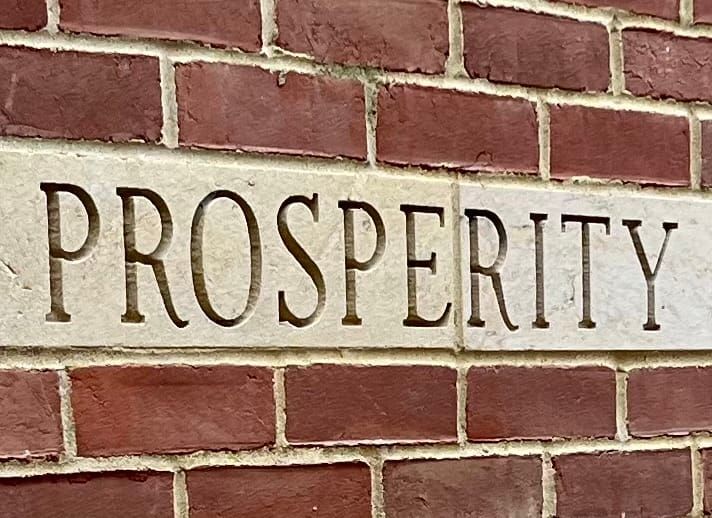
“Prosperity is the best protector of principle.”
Oof. This quip, this belief – the idea that personal virtue leads to wealth, and wealth to virtue – also has endured.
Twain had rejected his mother's religion, Calvinism, which is known, among other things, for viewing financial success as a sign of God’s favor. And he wrestled with many aspects of Christianity, even at one point declaring it “a terrible religion.”
But from his luxurious perch in a house full of servants, he linked poverty with ethical failure, and saw wealth as a kind of insurance against moral lapses.
Oh, Sam Clemens, if you could see the most prosperous among us now.
Yes, we have a few not-terrible ultra-wealthy folks – MacKenzie Scott and Melinda Gates, each divorced from problematic billionaires, are philanthropic powerhouses (their gender is worth noting).
But in much of billionaire world, things are catastrophically unprincipled.
There’s the one who makes money off ICE and gives lectures about the antichrist, oblivious to his own apocalypse-inducing behaviors. There’s the presidential adviser who brags about engaging in “zero” introspection, and another, more famous one who dismantled global aid programs that saved hundreds of thousands of lives each year. And then there's the ChatGPT guy, who isn't sure what truth is or what kind of doom he may be imposing upon humanity.
If “screwing over other people” is a principle, prosperity is certainly bringing it. Billionaire culture, like earlier cultures of elites, has a strong streak of human disposability – if someone isn't helping the rich get richer, who cares what happens to them?
It's clear that prosperity is no guarantee of principle; in fact, it often signals the opposite. This was true in Twain’s own era of robber barons, and it’s true today. The treating of the poor as criminals, as ethical failures, is a social norm and a way of denigrating immigrants – even as monumental grift is being openly practiced by national figures who have no need for more money.
Potential petty thefts by the less fortunate are policed at a greater level than huge crimes of corruption. At many stores near my home, a shopper can’t reach for a bottle of aspirin or a jug of laundry detergent without getting permission from an employee or setting off an alarm. Everyday necessities are locked behind glass, to protect them from "unprincipled" masses.
Retail theft is real, but I'm compelled to ask: If someone had a better option in life than stealing infant formula to resell, don’t you think they’d take it? Is this anyone's dream of success? America’s economic system requires a large, permanent pool of desperate people – to work in meatpacking plants, agricultural fields, and other less desirable jobs. And then the system punishes the desperate.
Taxes and public spending are the main way that money moves back down to help those at the bottom, with most billionaires preferring as little of that kind of thing as possible. Some do participate in philanthropy, so they can choose who is worthy of help and get tax deductions; others, like our president, skip philanthropy entirely.
Lower-income people, meanwhile, are consistently the most generous. Yet the poor end up subject to moral suspicion, from Calvinism to Twain to today's prosperity gospel, which tends to bypass Jesus' words about a rich man's chances of getting into heaven.
At a lower-end hotel that I used to stay at once a year, each room had a placard passive-aggressively informing guests that if we were to “accidentally take” a towel, we’d be billed $23. That level of mistrust is never spelled out at higher-end lodging, where customers are presumed to be more virtuous, despite evidence to the contrary.
Mark Twain had to sell his beloved mansion when bad investments destroyed his fortune. He eventually paid all his creditors back, even though there were legal means to avoid doing so (a contrast to our commander in chief's six bankruptcies). Twain’s financial woes did not automatically compromise his ethics, in the same way that longer-term poverty does not automatically compromise the ethics of the poor.
On some level, even Twain knew: the best protector of principle is conscience.